October 22, 2026
Headlights are one of the most critical safety components on your vehicle, illuminating dark roadways and ensuring you remain visible to other drivers during night trips or adverse weather. When your headlights start to flicker, dim unexpectedly, or pulse in rhythm with your engine, it is more than just a minor inconvenience; it is an early warning sign that your car’s electrical grid is experiencing instability. Modern vehicles rely on a sophisticated electrical network to power everything from fuel injectors to touchscreens, and your headlights often serve as the visual indicator when voltage fluctuates. Understanding how this system operates helps you identify underlying issues before a minor electrical glitch leaves you stranded on the side of the road.
Electrical problems are among the most common issues drivers encounter during routine vehicle ownership. According to Sharp Sheets, more than 75% of Americans visit an auto repair shop at least once annually. When electrical anomalies like flickering headlights occur, addressing them promptly preserves the longevity of your battery, alternator, and sensitive onboard computers. Ignoring these early warning signs can lead to cascading electrical failures that are far more complex and expensive to fix. By exploring the core components of your vehicle's charging and power distribution system, you can better diagnose why your lights are unstable and know when it is time to seek professional diagnostics.
Understanding Your Vehicle's Power Generation
Your car's electrical grid operates through a continuous cycle of power generation, storage, and distribution. While many drivers assume the battery powers the headlights while driving, the primary source of electrical energy when the engine is running is actually the alternator. The alternator converts mechanical energy from the engine’s crankshaft into alternating current, which is then converted to direct current to run your car's electronics and keep the battery charged. If the alternator begins to fail or its internal voltage regulator degrades, the electrical output becomes inconsistent, causing headlights to flicker or dim as engine revolutions change.
A failing alternator often struggles to deliver steady voltage under heavy demand, such as when you turn on the air conditioner, rear defroster, or stereo system. When total electrical consumption exceeds the alternator’s current output, the system draws temporary power from the battery, leading to noticeable power surges and dips. If you observe your headlights dimming specifically when idling at a stoplight and brightening as you accelerate, a declining alternator is a primary suspect. Visiting a certified auto repair shop allows technicians to perform a charging system test to measure output voltage under load and verify whether the alternator requires replacement.
Evaluating Battery Condition and Connection Integrity
The vehicle battery acts as a crucial voltage stabilizer for the entire electrical grid, absorbing sudden power spikes and supplying starting power to turn over the engine. As a battery ages, its internal chemistry degrades, reducing its capacity to maintain a steady electrical baseline. An aging or weak battery forces the charging system to work continuously, leading to voltage fluctuations that manifest as flickering headlights. Most car batteries have a functional service life of three to five years, after which their ability to cushion the electrical grid diminishes significantly.
Corroded, loose, or oxidized battery terminals are another frequent cause of light instability. Electricity must flow freely through cable connections to power your vehicle's components, and even a thin layer of corrosion or a slightly loose clamp can introduce resistance into the circuit. This added resistance disrupts the smooth flow of current, causing intermittent voltage drops that make headlights flicker unexpectedly while driving. Bringing your vehicle to a local auto repair shop for routine battery terminal cleaning and conductance testing ensures a firm connection and helps prevent electrical disruptions.
Checking Grounding Lines and Wiring Infrastructure
For electricity to complete its journey through your car’s circuits, it must travel from the power source through the load device and back to the chassis ground. Ground cables connect the engine block and body frame to the negative terminal of the battery, forming the return pathway for the entire electrical grid. Over time, ground wires can become loose, rusted, frayed, or broken due to constant engine vibration and exposure to road salt and moisture. A compromised ground connection creates irregular resistance, causing headlights and interior dashboard lights to flicker erratically.
Wiring harnesses that route power directly to the headlight assemblies can also experience wear and tear over years of vehicle operation. Plastic connectors can crack from heat exposure, female terminal pins inside plastic plugs can lose their tension, and wiring insulation can rub against metal frame edges. When a headlight wire makes loose or intermittent contact, the light will flicker when driving over bumps or navigating rough roads. A trusted auto repair shop can trace circuit continuity using specialized diagnostic tools to pinpoint damaged wiring or loose ground straps that are difficult to spot visually.
Diagnosing Headlight Bulb and Relay Degradation
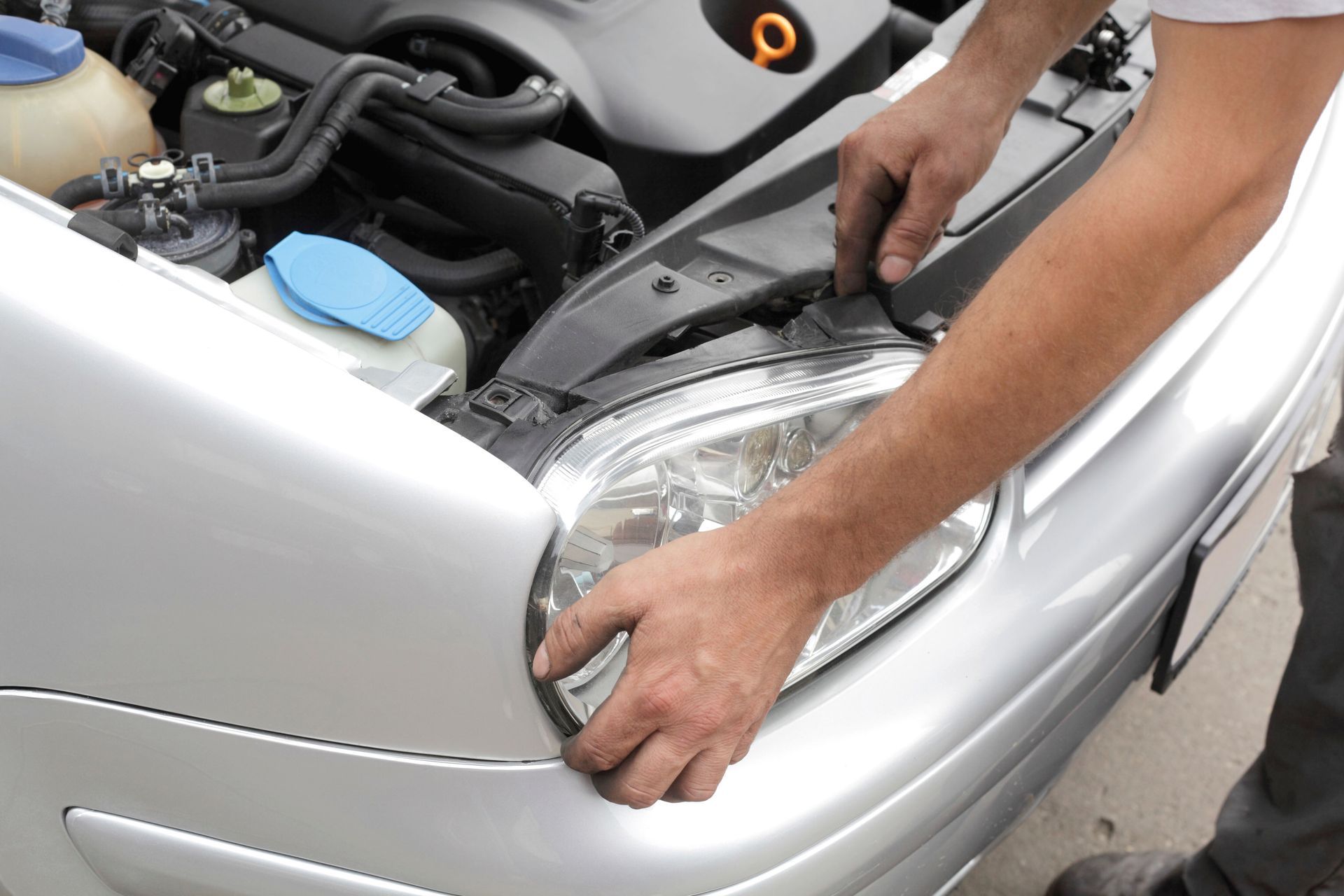
In many cases, flickering headlights originate within the lighting components themselves rather than the broader electrical grid. Traditional halogen bulbs utilize delicate tungsten filaments that degrade over time due to heat and vibration. As a halogen bulb nears the end of its operational life, the filament can develop microscopic fractures, causing it to vibrate and intermittently break contact before burning out completely. Similarly, high-intensity discharge and light-emitting diode systems rely on electronic ballasts or control drivers, which can flicker when internal circuitry begins to overheat or fail.
Relays and fuses located in the under-hood power distribution box also play an active role in headlight operation. Relays are electromagnetic switches that control high-current circuits using low-current signals, and their internal mechanical contacts can wear down, pit, or oxidize after thousands of cycles. A worn relay can chatter or fail to hold a solid connection, sending pulsing power directly to the headlight bulbs. Having an experienced technician at an auto repair shop inspect your lighting relays, switchgear, and bulb sockets can quickly resolve localized flickering issues.
Navigating Modern Electrical Grid Complexity
Modern vehicles feature sophisticated electrical grids managed by computerized control modules, such as the body control module. These microprocessors monitor power consumption across dozens of electronic systems and adjust power distribution dynamically based on real-time driving conditions. Modern vehicles also utilize pulse-width modulation, a technique that pulses electrical power at high frequencies to extend bulb life and reduce overall energy draw. If a control module senses an improper load or experiences a software glitch, it can cause the headlights to flicker unexpectedly.
Upgrading or modifying factory lighting systems can also disrupt the factory electrical grid. Installing aftermarket light-emitting diode or high-intensity discharge conversion kits without proper load resistors or anti-flicker modules often triggers system warnings and light flickering because computer modules mistake the low power draw for a blown bulb. When dealing with complex computerized networks, consulting a reputable auto repair shop ensures that any lighting upgrades or module diagnostics adhere to original equipment manufacturer specifications, preserving system harmony.
Flickering headlights are a clear warning sign that your vehicle's electrical grid requires professional attention, whether due to an aging battery, a struggling alternator, or loose wiring connections. Ignoring these warning signs can leave you vulnerable to sudden lighting failure during night drives or lead to unexpected breakdown situations. Taking a proactive approach to vehicle maintenance protects your electrical system and ensures your headlights deliver bright, dependable illumination whenever you take to the road. Contact United Mechanic Auto Service LLC today to schedule a comprehensive electrical system check and restore total illumination and safety to your drive.